
How we work
Clients work directly with the engineers designing and building their software—from initial architecture and scoping through production release and long-term support.
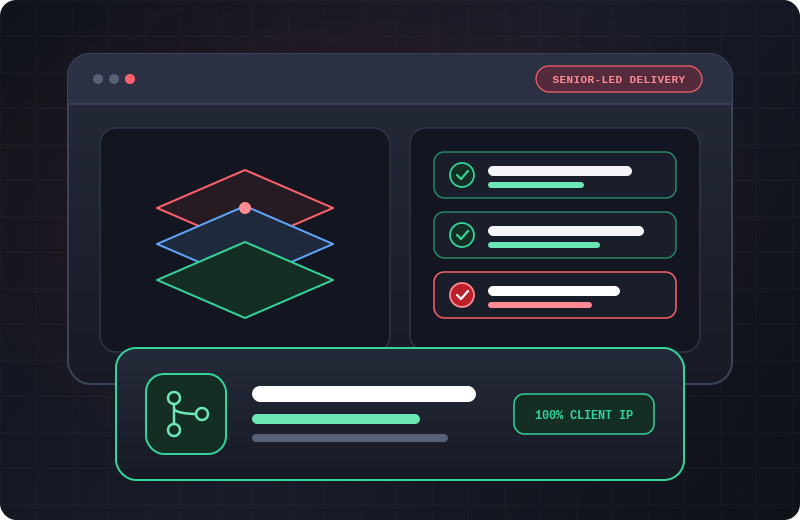
- Team Structure
- Compact, senior-led engineering execution
- Transparency
- Direct technical communication & staging builds
- Release Safety
- Signed-off acceptance checks & fallback plans
- Ownership
- Complete source code, documentation & access
End-to-end engineering delivery lifecycle
Architecture & execution blueprint
Define system boundaries, data models and release criteria
We map user roles, database schemas, external API contracts and acceptance checks before production development begins.
DELIVERY-104 · Architecture to Production Handover
- Deliverable
- System architecture & milestone specification
- Acceptance gate
- Agreed workflows, RBAC & failure handling
- Collaboration
- Direct access to lead engineers
Delivery lifecycle & engineering standards
- Direct Engineering Access · No Handoff Layers
- Fixed-Scope Projects · Ongoing Retainers
- Isolated Staging & Automated Verification
- Full Source Code, Runbook & Infra Ownership
Technical scoping & architecture
Before writing production code, we define the data model, system boundaries, first-release scope and concrete acceptance checks.
- Architecture blueprint and technology stack selection
- Role permissions, API contracts and failure-mode planning
- Clear milestone breakdown with realistic review windows
Direct engineering & staging reviews
You communicate directly with the engineers building the system. We ship working increments to an isolated staging environment for early verification.
- Regular staging demonstrations against real workflow scenarios
- Validation of role access, edge cases and integration behaviour
- Transparent impact assessment whenever requirements evolve
Controlled release & fallback readiness
Production deployments follow a documented release checklist with live verification and a ready fallback procedure.
- Database migration dry runs and environment configuration checks
- Live smoke testing of critical workflows immediately on release
- Immediate rollback path if any downstream dependency fails
Handover or ongoing stewardship
You retain complete ownership of your source code and infrastructure, whether your internal team takes over or Heaplex continues maintaining the platform.
- Clean source repositories, deployment pipelines and runbooks
- Operational handover for internal IT and department owners
- Optional ongoing maintenance and feature evolution agreements
Ready to scope an upcoming project?
Send a short outline of what you need to build or improve and the systems involved.
Discuss a project